Category: Yacht Safety

  • Safe Installation of Diesel Heaters on Yachts

    Safe Installation of Diesel Heaters on Yachts

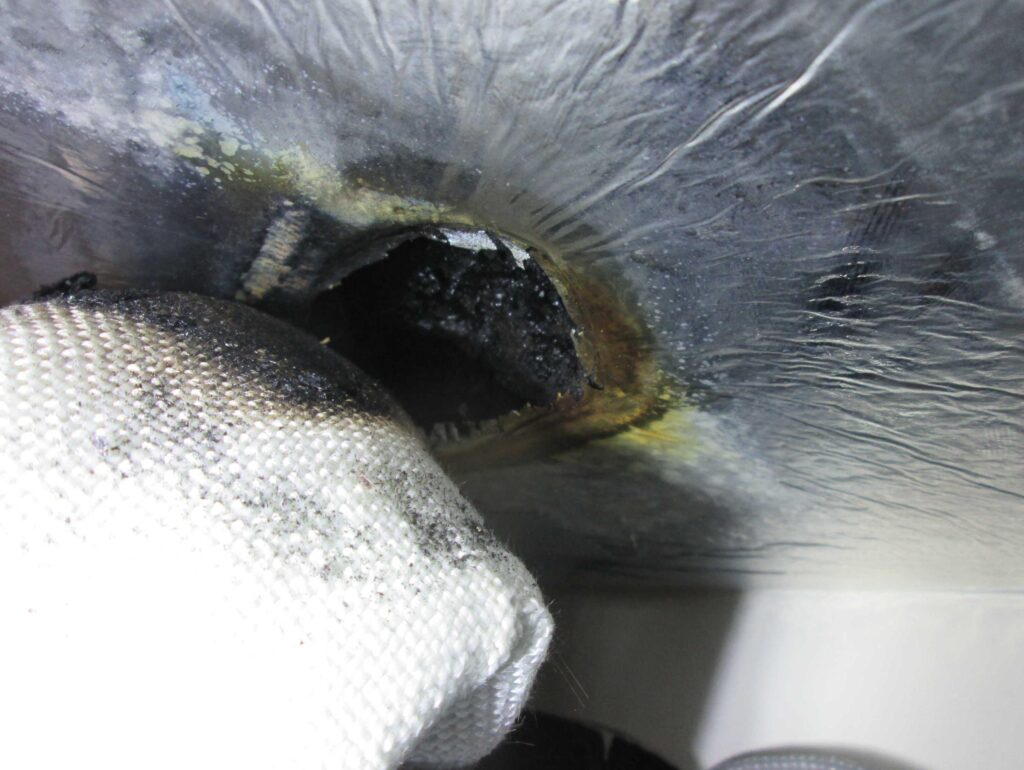
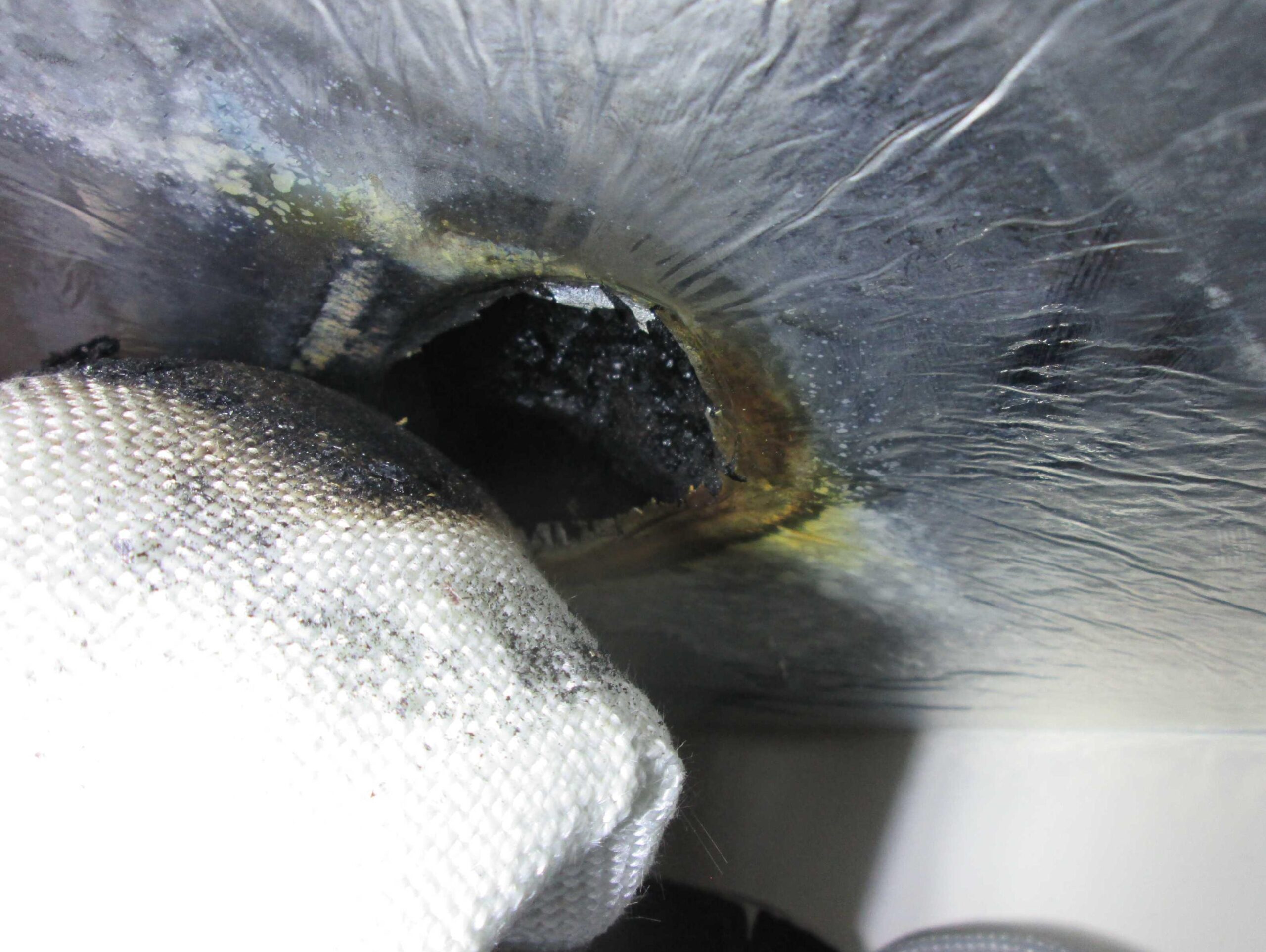
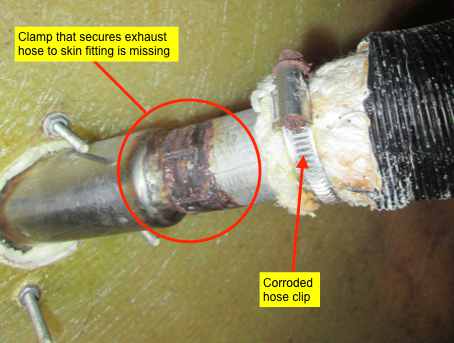
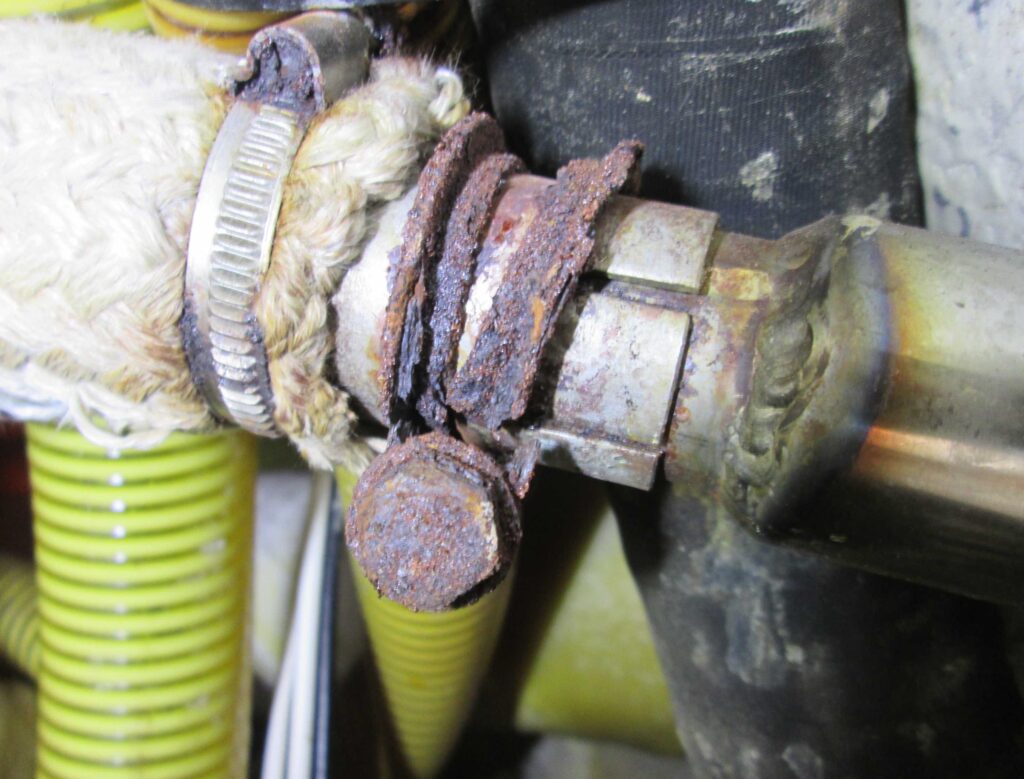
    There’s a wide choice of good quality diesel-powered space heaters these days, but in my surveys, I often find that the problem lies with the quality of the installation of the heater units. The positioning and securing of the lagged exhaust pipes is not always up to standard: Poor quality pipe clamps, missing pipe clamps (or maybe they corroded and fell off) and lagged pipes positioned too close to compartment insulation or GRP mouldings. The attached photos show just some of the nasties that I have found in cockpit lockers and engine compartments. The photo of the missing clamp was taken shortly after the unit had been serviced by an authorised agent. If I hadn’t found this defect during the survey of the vessel, the boat may well have sailed for another ten years without the Owner being aware that his heater was poorly installed and in an un-safe condition.

    Maybe the manufacturers of these products could take an idea from the Defence & Aerospace Industry: Where threaded fasteners are used to secure an item, these are often of the ‘captive’ variety. This means that when the screw is un-fastened, it won’t fall out and disappear inside the aircraft, submarine, or in the case of boat heaters, into the bottom of a wet, dark bilge. Judging by the quality of some of the non-stainless steel hose clamps that I have seen on heater exhaust pipes, I can only assume that the Fitter has lost the original pipe clamp in the vessel’s bilge, or in the back of his van, and has simply fitted an inferior equivalent clamp. If the original clamps were integral to the heater unit and the skin fitting, there would be no chance of these crucial items going missing and this would reduce the likelihood of poor quality clamps being used in their place. These would cost more to manufacture, but it would be justifiable in passing this cost on to the consumer as the durability and security of these clamps is of significant importance when ensuring that the heater units remain safe throughout their life.

    Whether my survey inspection finds the diesel heater unit to be well installed or poorly installed, I always recommend that the vessel is fitted with one or two Carbon Monoxide alarms. These units are a potential life saver, but they are no substitute for a correctly installed and well maintained fuel-burning heater unit.
  • Poorly Maintained Gas System on a Yacht

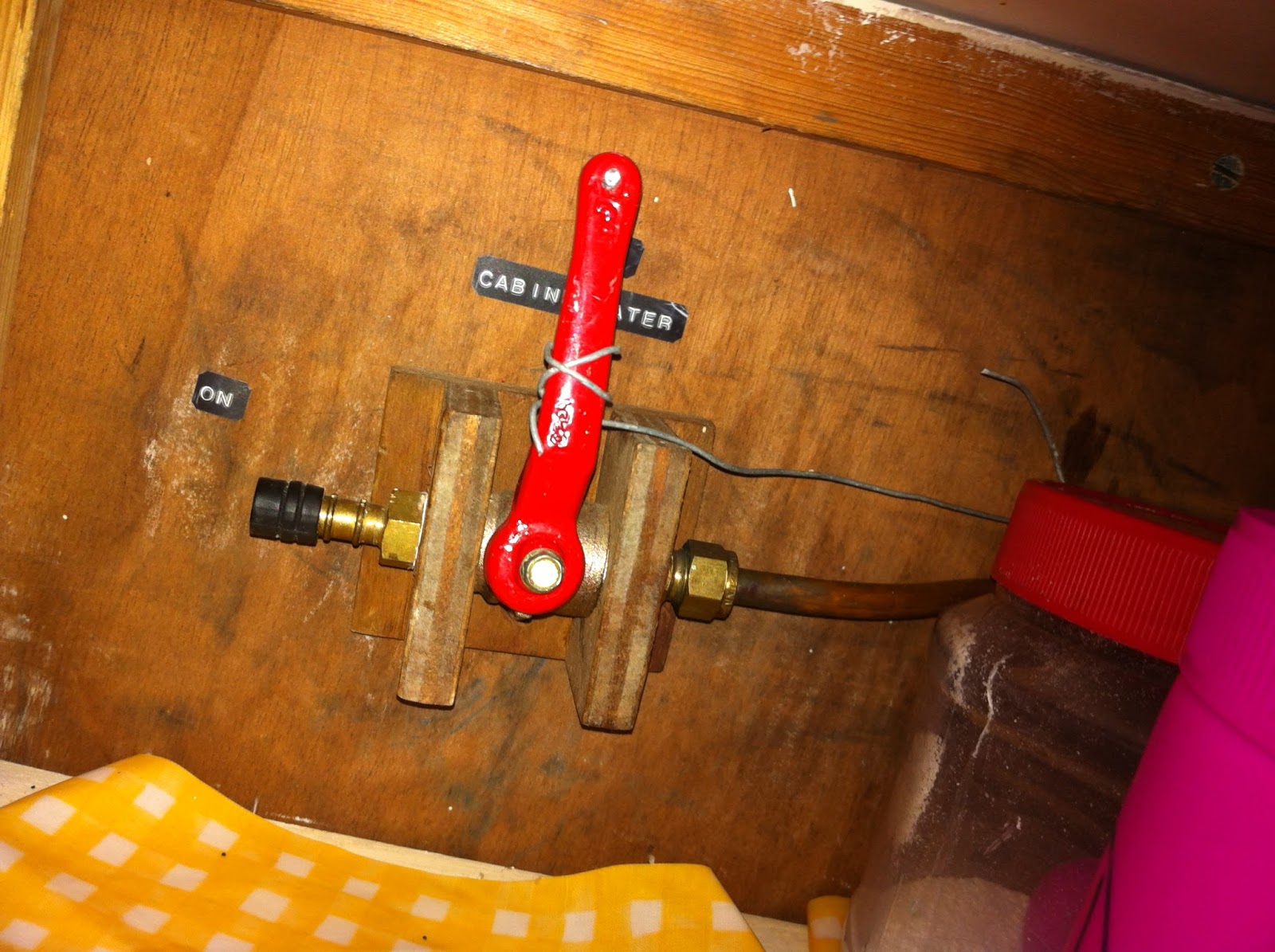
    Here is an example of a poorly maintained Gas System on a yacht. The photograph below shows a poor method for terminating an unused gas pipe on a 29′ motor sailing yacht that I inspected recently.

    Gas System on a Yacht

    The vessel used to be fitted with a gas-powered cabin heater, but the heater unit had been removed at some time in the vessel’s life. The gas supply pipe had been partially removed, but only up to the nearby isolation valve. The valve was then held in the closed position by a short length of steel wire.

    • When I find a poorly installed or poorly maintained gas system on a yacht, I will always recommend that the system is overhauled or serviced by a  qualified person listed on the gas safety register. See http://www.gassaferegister.co.uk for further details.
  • Check the bow roller for cracks

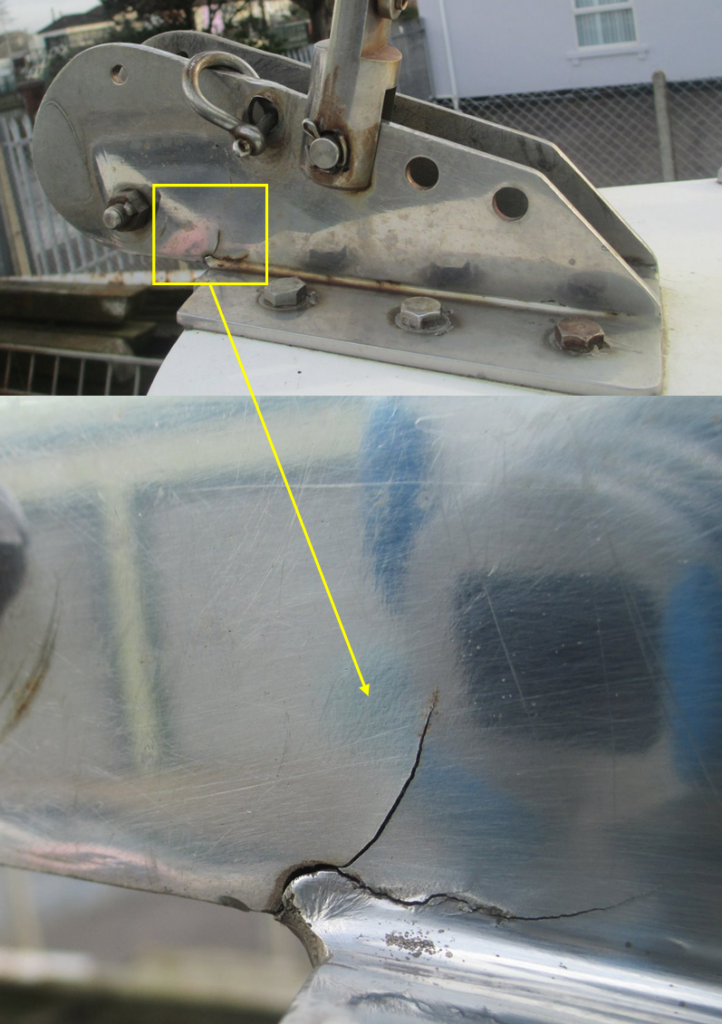
    The damage of the bow roller shown in the photograph above was found during an Insurance Survey of a 1976 Westerly Berwick, a British built, masthead rigged sailing yacht with cast iron bilge keels.

    During the inspection of the rigging chain plates it was found that there were a number of well developed cracks in the two vertical plates that support the bow roller. The photographs show the two cracks on the port side plate. This plate also supported the forestay, therefore the security of the entire rig depended on the strength and integrity of this plate. In consideration of the observation that similar cracks were found on each of the vertical plates, it is likely that these cracks were predominantly due to cyclical loading from the vessel’s mooring chain whilst she was on her summer mooring. The cracks on the port side plate may also be due to cyclical athwartships loading from the jib when she is sailing. There was no evidence to suggest that these cracks have occurred as a result of an impact with an object.

    The report recommended that the bow roller fabrication was repaired in order to return strength to the two plates. As this repair would have involved welding, the entire fabrication would have to be removed from the foredeck as the heat generated would have damaged the GRP deck.

    Cracks in Forestay Chain Plate Fabrication
  • Water Trap in Gas Locker Drain

    Thankfully I don’t come across this defect very often. It is probably something that many owners would never notice as everything looks as though it is in good order. Having said this, the hose in this photo of a gas locker drain should be of the reinforced type. Also, two hose clips should be used if the skin fitting allows this.

    It isn’t entirely clear from the photograph, but the gas locker drain hose from the boat’s gas locker has a bend in it that can trap water. If water were to enter the locker, it would find its way into the hose where a small amount would be trapped. Similarly, when the boat is healed over on a close-haul, seawater could easily enter this drain. Until the water is able to evaporate, the locker drain will effectively be blocked. This would prevent any leaked gas from escaping harmlessly overboard. Cooking gas or LPG is a very ‘searching’ gas and will seep through gaps that might normally be airtight. On this vessel, it would have entered the aft heads and then into the bilge, with potentially devastating consequences.

    This simple but important defect was discovered on a standard Insurance Survey on a 33′ sailing yacht. Owners are usually reluctant to have these surveys done as it is often considered that the report is purely for the benefit of the Insurance Company. The above example clearly shows that the vessel’s owner can gain significantly from having a thorough survey performed on their craft, even if they think that they know their boat inside-out.

    Yacht Survey, Gas Locker Drain
    Gas Locker Drain Hose with Water Trap in U-bend
  • Perished Fuel Filler Cap Seal

    Diesel or Petrol fuel filler caps are often located on an exposed area of horizontal deck or cockpit floor, particularly on sailing yachts. I recently performed a pre-purchase survey on a Nauticat Pilothouse Ketch, located at Woolverstone Marina, Ipswich. The image below shows the perished Fuel Filler Cap Seal of the starboard fuel tank of this motor-sailer. Note that the nitrile rubber has aged & hardened, resulting in numerous circumferential cracks in the O-ring, each one allowing moisture into the fuel tank. Additionally, the part of the fitting that was set into the deck was poorly designed, allowing sea water, rain water or dew to collect in the rebate that runs around the opening hole.

    Prior to the discovery of the degraded fuel filler cap seal and during the survey of the rest of the vessel’s fuel system, I had carefully inspected the glass-bowled primary fuel filter of each fuel tank. I noted that the colour of the liquid inside the starboard tank filter suggested that there may be water in the tank.

    These were the recommendations made in the report:

    1. It was found that the primary fuel filter for the starboard fuel tank had a layer of water at the bottom of the glass bowl. It is RECOMMENDED that any water in the bowls is tapped off from the primary filters for both fuel tanks. The fuel tanks should also be drained off and the contents checked for water contamination.

    2. The two fuel tanks are refuelled via separate filler caps located on the port and starboard side decks. They were appropriately labelled with the text ‘diesel’. It was found that the O-ring seals that seal the filler caps were heavily perished. It is RECOMMENDED that the filler cap O-ring seals are replaced.

    The new owner of the Nauticat was able to drain off two buckets of water from the starboard tank! He was lucky that there was no evidence of diesel fuel fungal growth in the tank as disel fuel with a high moisture content tends to encourage their growth.

    Fuel filler cap seal on sailing yacht
    Typical deck-mounted fuel filler cap