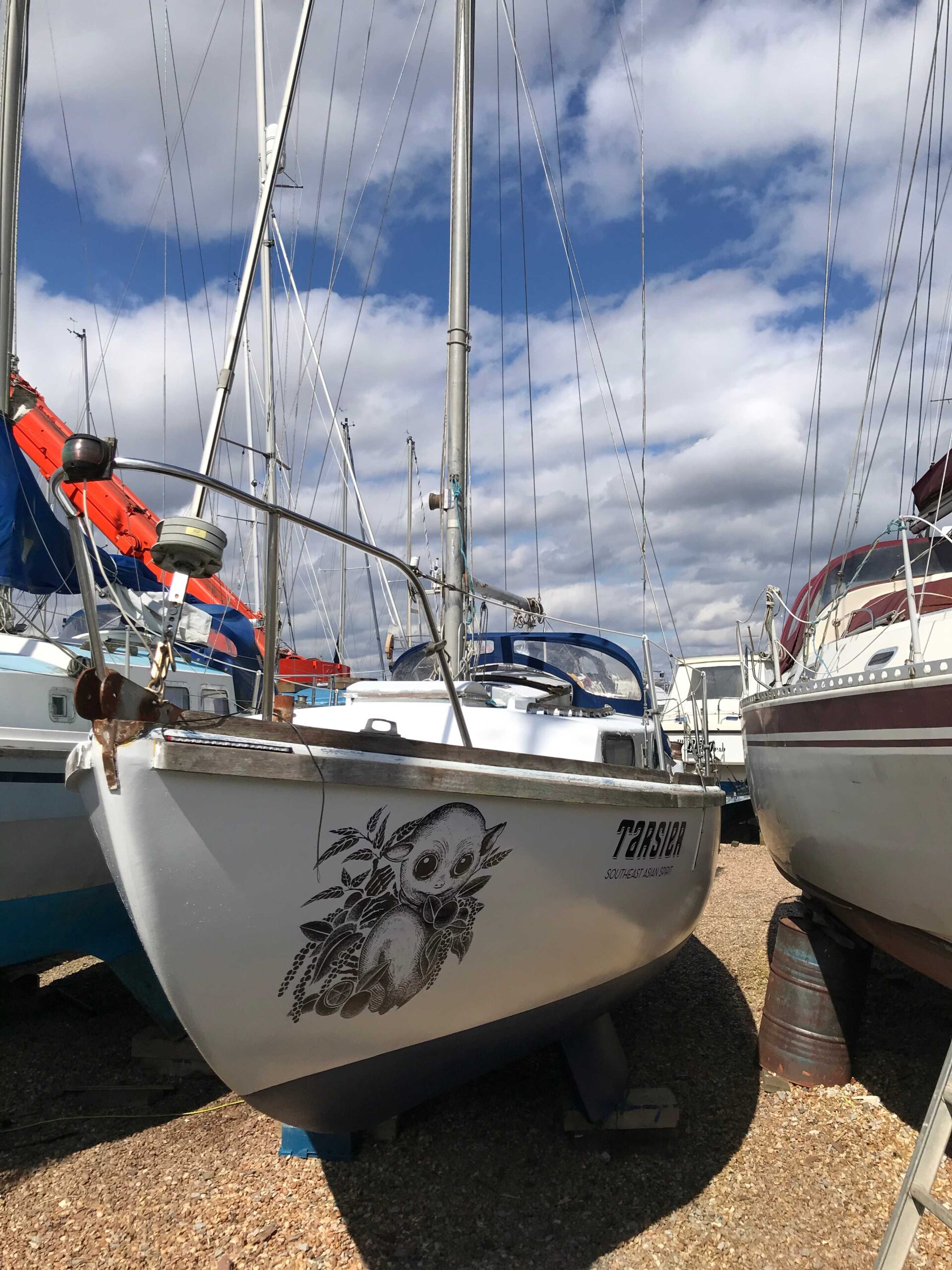
The initial enquiry from the Client for a tonnage survey on his Macwester 26 was received on 10th April. The survey was carried out three days later. By 16th April the application had been scrutinised & approved by IIMS and the certificate supplied to the Client. Everyone concerned deserves a gin & tonic for the quick turn-around of this application!
Tonnage Surveys are required if a boat is to be registered under Part 1 of the British Registry of Shipping. The owner of the boat must be British and they must sign a Declaration of Eligibility and submit an application form along with proof of ownership.
The calculated tonnage figure bears no relation to the vessels’s actual weight, but is a volume calculation based on the length times breadth times depth. The vessel may be in or out of the water whilst the survey is being carried out. Click on this link to find more information on the Tonnage Survey process.
Tonnage Survey of Macwester 26 at Quay Lane Boatyard, Gosport
I was recently asked to undertake a Damage Survey of a flooded yacht. My instruction from the Insurance Company was to inspect and assess the nature, extent and cause of the damage to the vessel.
Water had entered the vessel over a period of time, leaving the boat low in the water and the engine partially submerged.
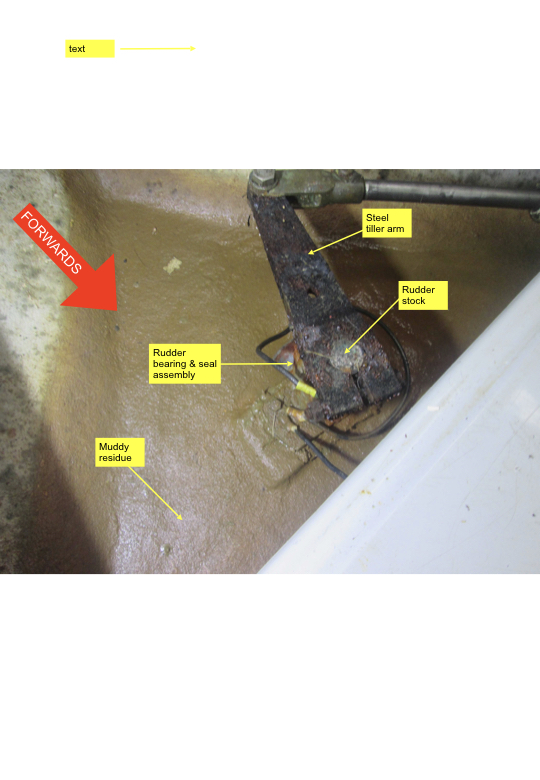
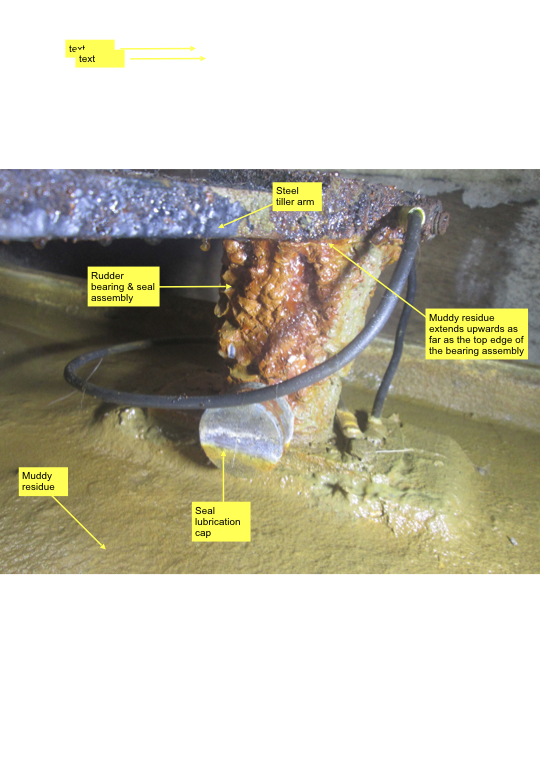
She was inspected out of the water at East Cowes, Isle of Wight. In my search for the cause of the leak and working my way from bow to stern, I found water and muddy residue around the upper bearing & seal of the rudder assembly. This provided good evidence that water had leaked into the vessel from the top of the bearing assembly. At this stage of the inspection, I could have packed up, gone back to my office and simply reported that the rudder bearing & seal assembly was the most likely origin of the leak. This conclusion would have been unsatisfactory as it would have required the re-floating of the vessel in order to test & confirm that the rudder bearing & seal assembly was leaking. This task would have involved significant additional costs, which would have to be borne by the Insurance Company or the Insured.
In order to confirm that water had leaked around the seal of the rudder bearing, I built a dam around the bearing assembly, which was then fed with water from a hose. I then went outside to check for water. The YouTube video shows the test.
The result of this test confirmed that the faulty or worn water seal of the rudder bearing was the proximate cause of the water ingress. The head of pressure on the bearing seal from this water test was approximately 2 to 5 cm, which was considered to be very low. The rate of water leaking was estimated to be at least 3 to 4 drops per second. When the vessel was originally afloat, the pressure head would have been approximately 20 cm, which would have created a flooding rate that would have been approximately 4 to 10 times greater than the leakage rate seen during this test, although this rate would have been reduced due to the accumulation of mud inside the rudder bearing & seal assembly.
If you have any questions regarding this Damage Survey, please leave a comment or contact us via our website.